About AI Review Rating
Most AI tool directories are lists. We wanted a record you could check.
There are more AI tools than anyone can evaluate, and almost every page written about them is either the vendor’s own copy or a ranking nobody explains. We built the opposite: 1,724 tools scored against a rubric we publish, with the evidence for each score visible on the page.
Our mission
Give anyone choosing an AI tool the same quality of information a careful buyer would gather themselves, without the week it takes.
The problem is not that information about AI tools is scarce. It is that almost none of it is comparable. One page quotes a price per seat, the next a price per million tokens, a third quotes nothing at all and asks you to book a call. Scores appear with no method attached, and the tool paying the most is usually at the top.
So we made the method the product. Every score is produced by a published rubric, every price is read from the vendor’s own pricing page, and every commercial relationship is labelled where you can see it. You do not have to trust us. You can check us.
How this site is different
Scores you can audit
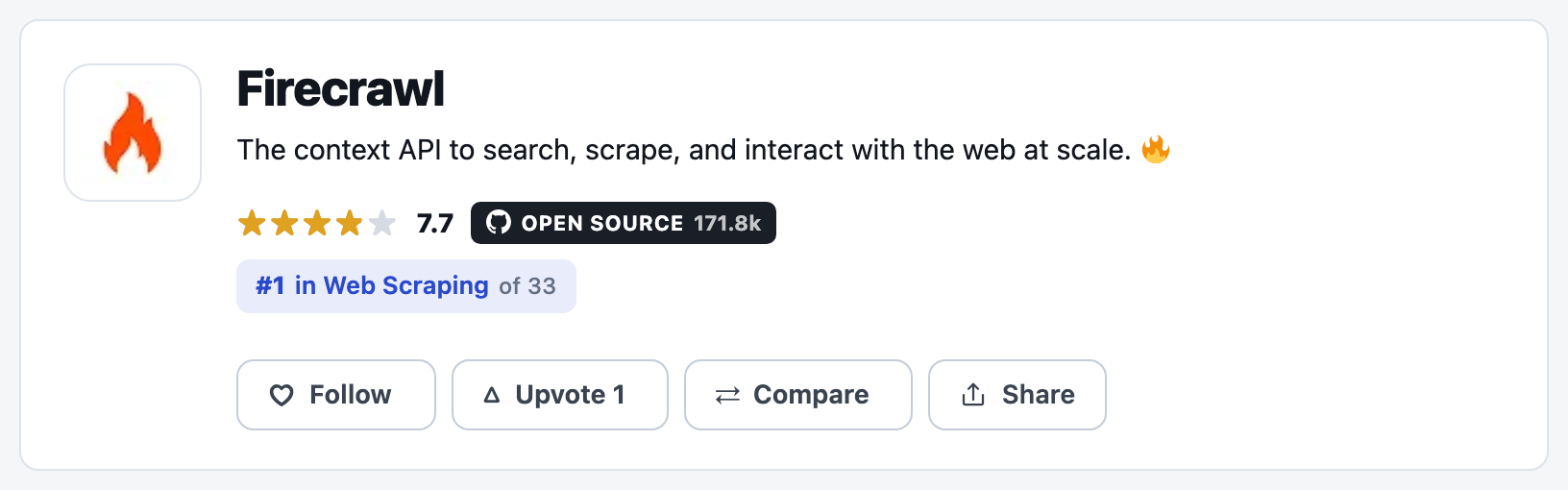
A tool page: the star rating, the score, and its rank within its category.
Every score comes from the same rubric, and the parts that produced it are stored with the tool. A review done from public evidence alone is capped at 8.5 out of 10 - the remaining headroom is reserved for tools we have actually used and dated. A perfect score from a desk review would be a claim we could not support.
Prices from the source
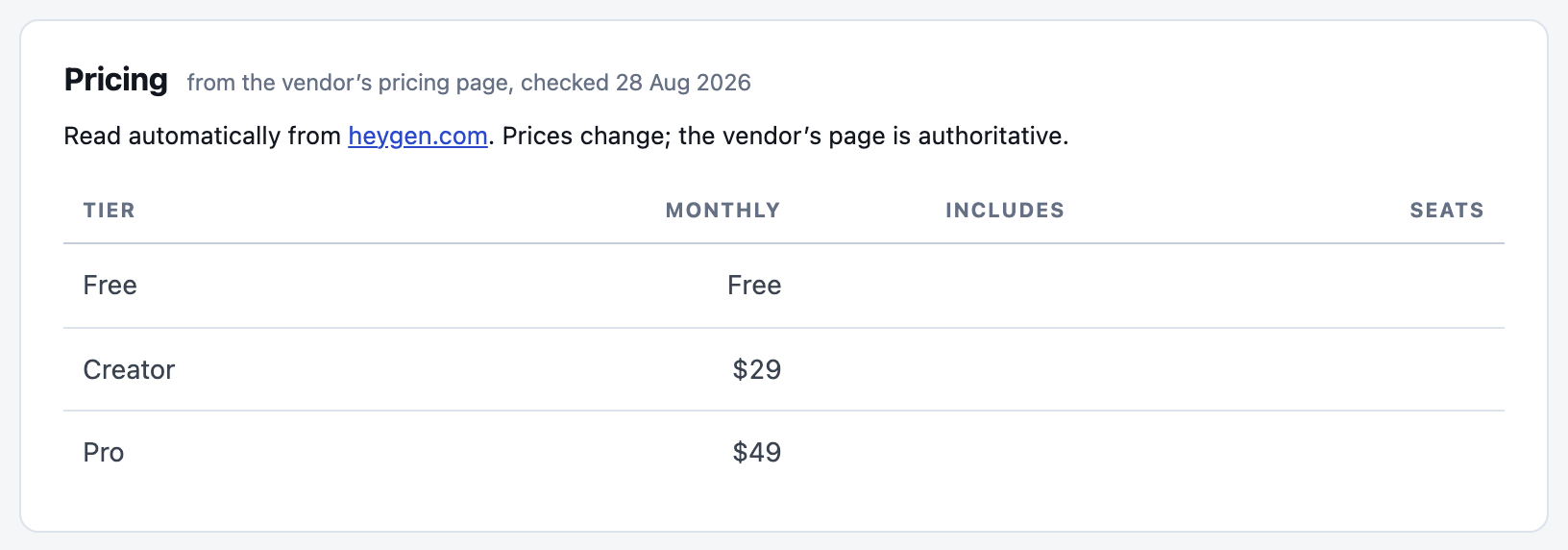
Pricing read from the vendor’s own page, with the date it was checked.
Pricing is read from each vendor’s own pricing page and dated, not copied between directories until nobody knows where the number came from. 1,330 tools link to the page their price was taken from. Where a price cannot be verified, we say so rather than print a guess.
Money that never moves a score
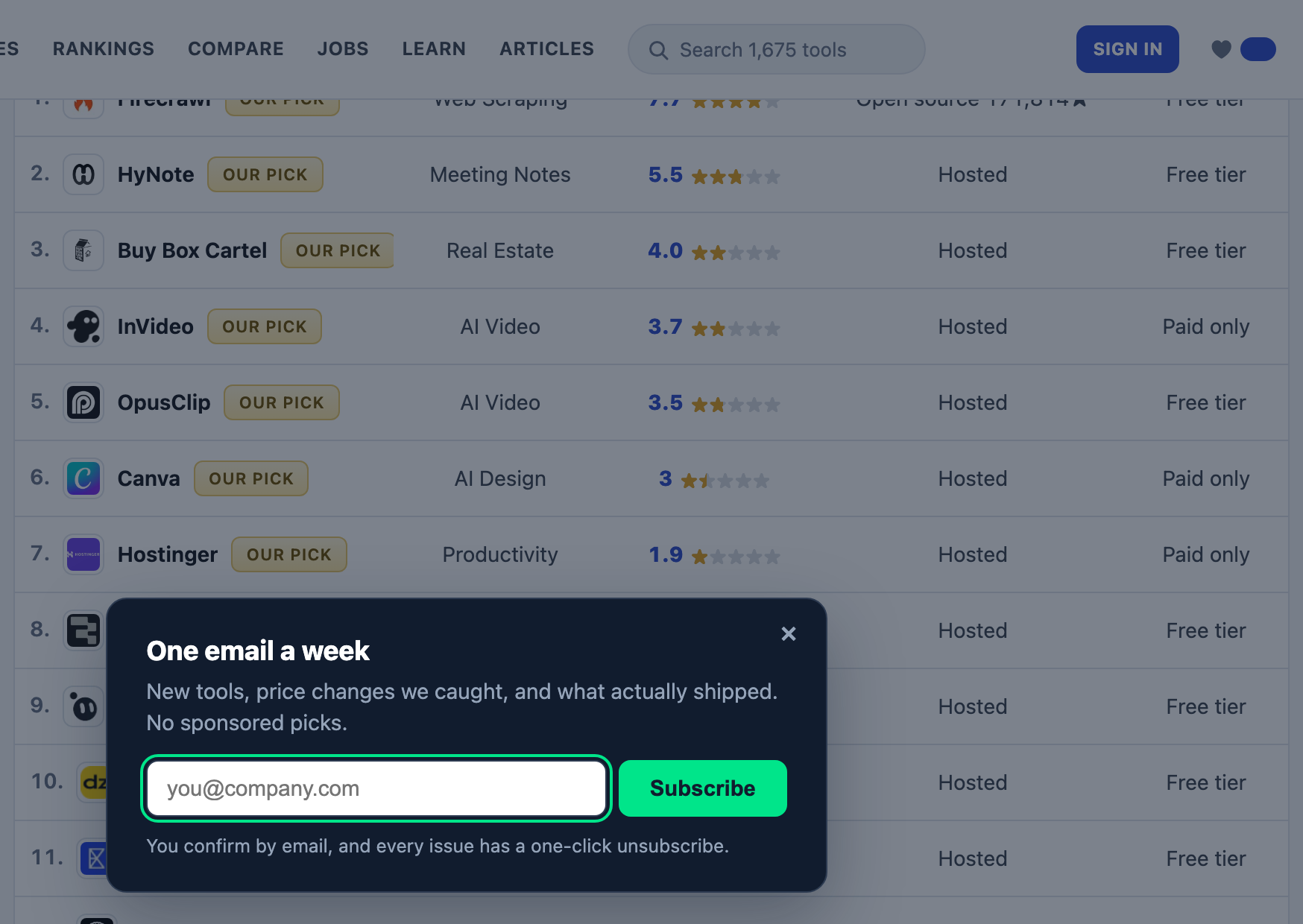
The ranked table: promoted tools carry a visible label, and the score column is unaffected.
We earn a commission on some tools. Those are placed first in listings and marked “Our pick” wherever they appear, so promotion is visible rather than hidden in an ordering. What a commission never does is change a number: the rubric does not know which tools pay us.
How we got here
In under four years the way people find software changed completely. These are the public launches that did it, and the reason this site exists in the form it does.
- Nov 2022 ChatGPT opens to the public A research preview reaches a million users in five days. Overnight, asking a machine becomes a normal way to find something out.
- Dec 2022 Perplexity launches An answer engine rather than a list of links. The first serious sign that the ten blue links were not the only shape a search result could take.
- Mar 2023 GPT-4 and Claude arrive Two frontier models within weeks of each other. The question stops being whether these tools work and becomes which one to use for what.
- Feb 2024 Google renames Bard to Gemini The incumbent reorganises its whole assistant around a single model. Search itself starts answering rather than pointing.
- Now Thousands of tools, no way to compare them Every category has dozens of products, each with its own pricing shape and its own claims. We built the comparison the boom never got: one rubric, published, applied to every tool the same way.
What we have indexed
1,724 tools across 24 categories, counted from the live catalogue. Hover or tap a bar for the number, or open the category.